
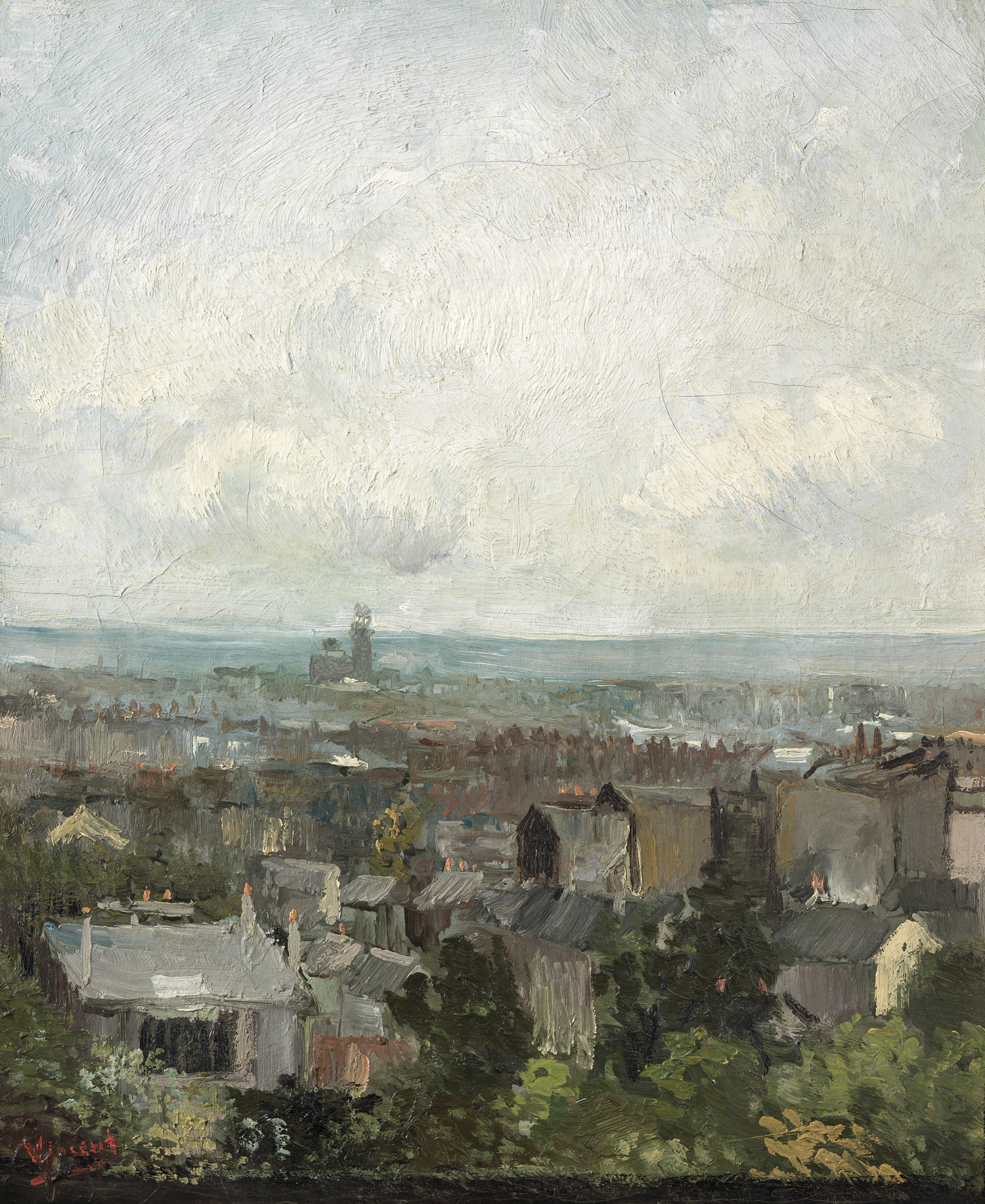
 Vincent van Gogh (1853-1890), 'Rooftops in Paris', 1886. © National Gallery of Ireland.
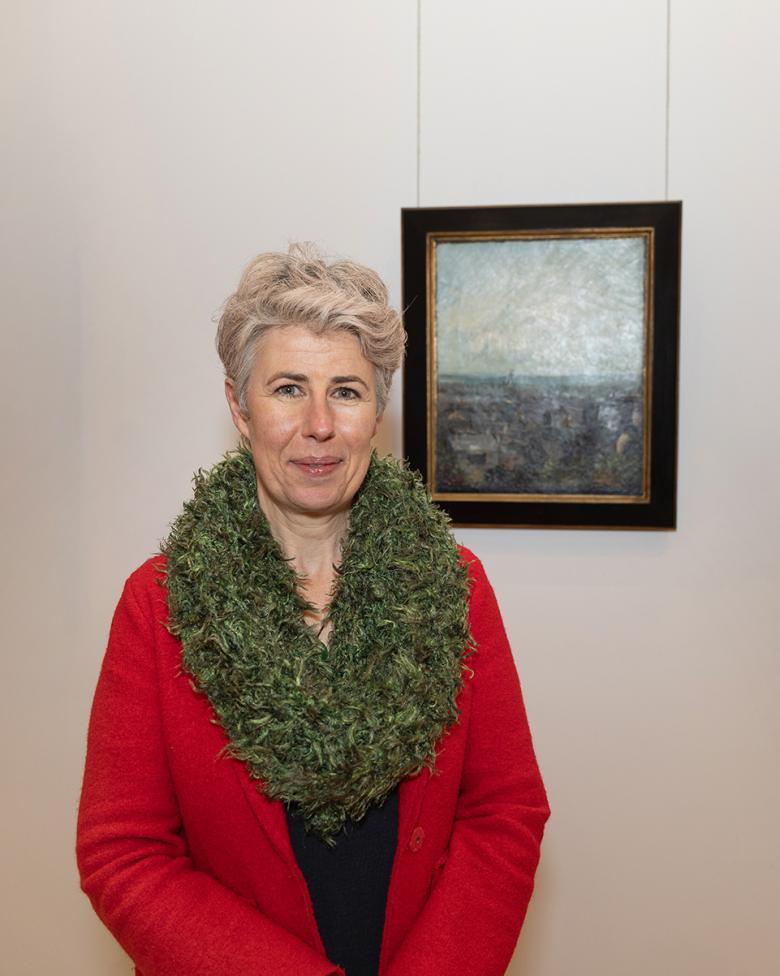
The National Gallery of Ireland is proud of its panel of enthusiastic and dedicated volunteers.
Volunteers play an important role in many areas of the Gallery, from welcoming our visitors as they enter the Gallery to showing that anyone can be an artist in the Creative Space. They ensure that the Gallery is consistently offering an outstanding visitor experience. In return, Gallery volunteers deepen their knowledge of art, develop a variety of skills, meet like-minded art enthusiasts, and more. Our volunteers are often the first point of contact for people who come into the Gallery. As part of a new series, we're asking our volunteers to share the artwork they tell visitors not to miss when exploring the Gallery for the first time.
Emily McCormack chose Vincent van Gogh's Rooftops in Paris.
Vincent van Gogh (1853-1890), 'Rooftops in Paris', 1886. © National Gallery of Ireland.
Tell us a bit about the painting. What do you like about it?
I love this painting. Painted in 1886, shortly after Van Gogh arrived in Paris, this work marks a pivotal moment in his artistic evolution. It’s the bridge between his early, more traditional Dutch style and the expressive, colour-saturated canvases that would later define him.
What I love most is how this painting whispers rather than shouts. You can miss it along the wall if you’re not paying attention. The palette is muted. Mostly desaturated greys, greens and browns, yet it’s still warm. His subtle use of Naples yellow on the gables and a tiny row of pink-red chimney pots lifts the eye, guiding you gently across the rooftops. They’re small, but they add warmth to the cooler tones around them.
The only window in the entire scene belongs to the church, as if it’s the sole witness, watching Van Gogh paint the view before him. He painted this from his apartment in Montmartre, and you can feel the solitude in it. No people, no movement, just the quiet hush of a city seen from above. I’ve read that he may have used a telescope to capture the distant buildings, including Notre Dame, which sits almost awkwardly in the composition, like a symbol of permanence in a world of change.
What moves me most is knowing that Van Gogh was only an artist for ten years. He was well read, multilingual, and immersed in art from the age of sixteen. Despite his mental illness, financial hardship, and the emotional weight of relying on his younger brother Theo, he never stopped evolving.
This painting gives me hope in a world that expects you to settle on a style straight away. Van Gogh reminds me that you’re allowed to shift, to grow, and to take your time. Rooftops in Paris feels like a quiet moment before everything opened up for him, a small, steady beginning rather than a big grand statement.
What do you enjoy about volunteering at the Gallery?
I enjoy volunteering at the Gallery because of the mix of visitors and artworks. It’s a big place, built at various stages, so it’s nice to help people find their way, whether they’re looking for a particular room, a tour, or the best route through the collection. There’s a real lift when someone comes back to tell you about something they’ve just discovered. Seeing them light up as they describe it is the best part, especially if it’s their first visit.
Volunteering also breaks the quiet of studio life and gives me the human connection I often miss during the week. I love the interaction, and I’m always struck by what the Gallery means to people, a rest, a place to reset or escape, or just revisiting paintings like old friends. It’s an extraordinary place that genuinely free and open to everyone.
Thank you, Emily! Find this painting by Vincent van Gogh hanging in Room 3 the next time you visit us.
You can read more about the Gallery's Volunteer Programme here.
Please note that we are not currently seeking volunteers - our next callout will be in 2027.
You might also like:
-

Volunteer Artwork of the Month - Demosthenes on the Seashore
Maura Fennell recommends this painting by Eugène Delacroix
-

Volunteer Artwork of the Month - Graham Norton
Moirín Moynihan suggests an artwork you shouldn't miss
-

Volunteer Artwork of the Month - Calisto
Vincenza MacDonald suggests an artwork you shouldn't miss
-

Volunteer Artwork of the Month - Saint Francis Receiving the Stigmata
Sophie Deering recommends this work by El Greco
-

Volunteer Artwork of the Month - Girl Going by Trinity in the Rain
Catherine Crichton recommends seeing this painting by Una Watters
-

Volunteer Artwork of the Month - Andrea di Bartolo
Biddy Scott recommends this work by Andrea di Bartolo.
-

Become a volunteer
We are proud of our enthusiastic and dedicated volunteers.